
Closing foundational learning gaps
Our FLN program closes foundational learning gaps in Grade 4 and beyond through structured daily practice, aligned with the NIPUN Bharat Mission and NEP 2020.
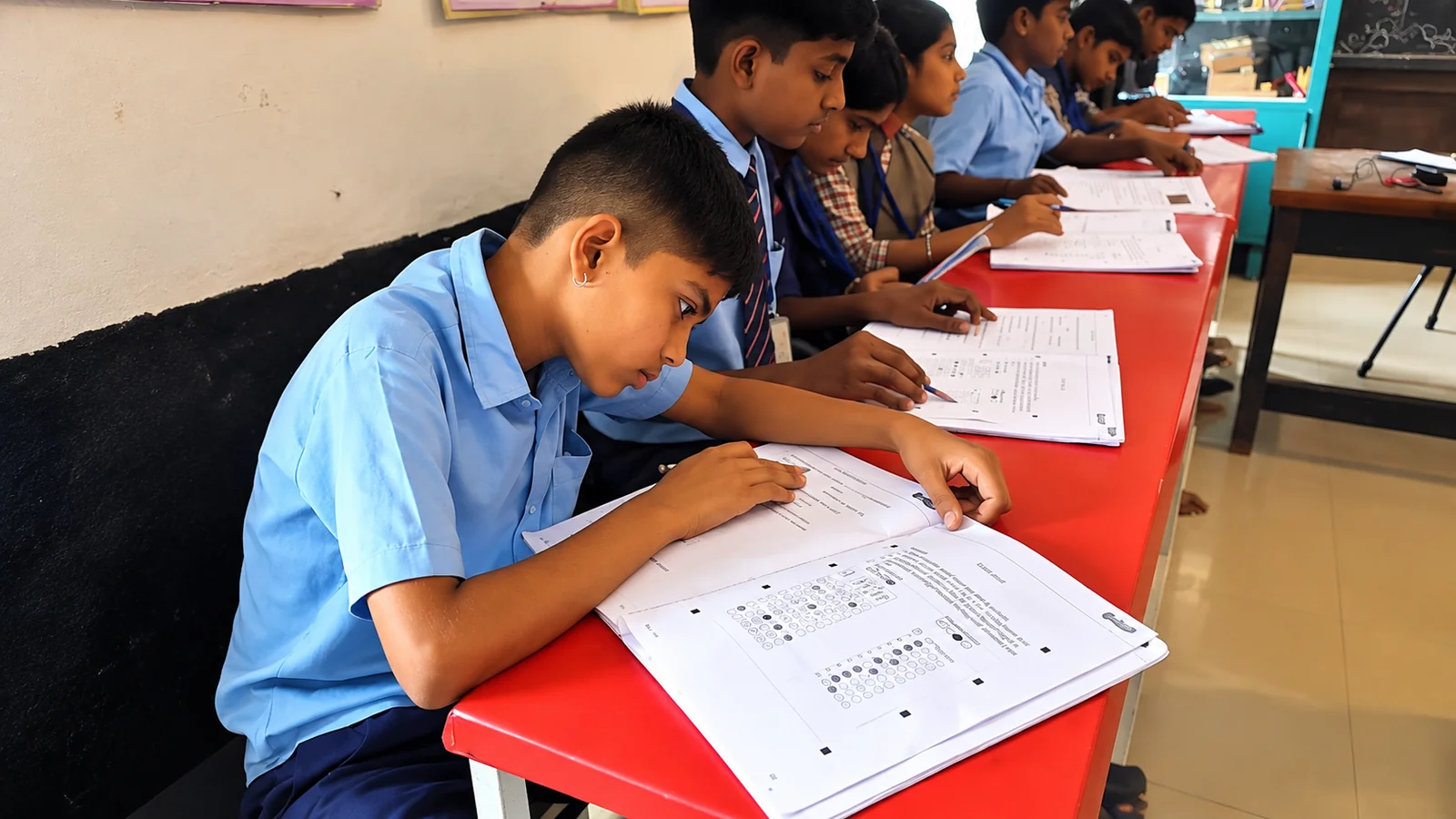
Closing the foundational learning gap
Data from the National Achievement Survey (NAS) and ASER 2023 reveals a critical need for early intervention. Only 27% of Grade 3 students in rural government schools can read a Grade 2-level Kannada text, and fewer than 30% can perform basic subtraction.
CWC's FLN remediation program addresses foundational gaps in students from Grade 4 onwards. It covers all FLN competencies as a bridge to grade-level outcomes, meets students at multiple levels of depth, and fits easily into teachers' existing academic calendar.
Fewer than 30% of Grade 3 students can perform basic subtraction.
A comprehensive, structured resource toolkit
A robust suite of 220 specialised learning sheets covers the full span of foundational literacy and numeracy — structured, sequenced, and ready for the classroom. Each competency is broken into sub-skills and unit-level outcomes that spiral in difficulty from step one.
Each foundational learning outcome is built across three proficiency levels, so children who need to catch up and children already at grade level both stay engaged and keep improving from where they are.
What we measure
Built with the system, for the system
Developed in collaboration with district and state institutions and mapped strictly to state curriculum standards.
DSERT
Alignment with state curriculum and assessment standards.
DIET
Collaborative development and district-level rollout support.
Teachopia
The digital platform delivering QR-linked resources for every sheet.
Caring with Colour
Content design, curriculum mapping, and the M&E framework.
The change we expect to see
Literacy mastery
Students develop literacy and reading comprehension skills essential for all further academic outcomes.
Numeracy mastery
Students build numeracy skills covering numbers, counting and all four basic operations in daily life.
Grade-level proficiency
Addressing gaps at multiple levels of depth helps students move up to grade-level learning outcomes.
Nearly six in ten children improved
An independent assessment, in collaboration with the National Institute of Advanced Studies, assessed 12,014 children across three districts, measuring each child's score at the end of the year against their own score at the start.
Younger children gained the most: Grade 4 children gained 6.2 marks on average, three times Grade 9's 2.0. School visits confirmed widespread adoption of FLN practices, with teachers reporting stronger student engagement.
Source: Third-Party Impact Assessment Report, 2025–26
Help us bridge the foundational learning gap for India’s future
Partner with our FLN initiative to bring joyful, foundational learning to every rural classroom.