E-Sambhashane: Let’s Speak English
Transforming rural government schools into English-rich environments by empowering teachers through a culturally rooted, conversation-first spoken english training program.
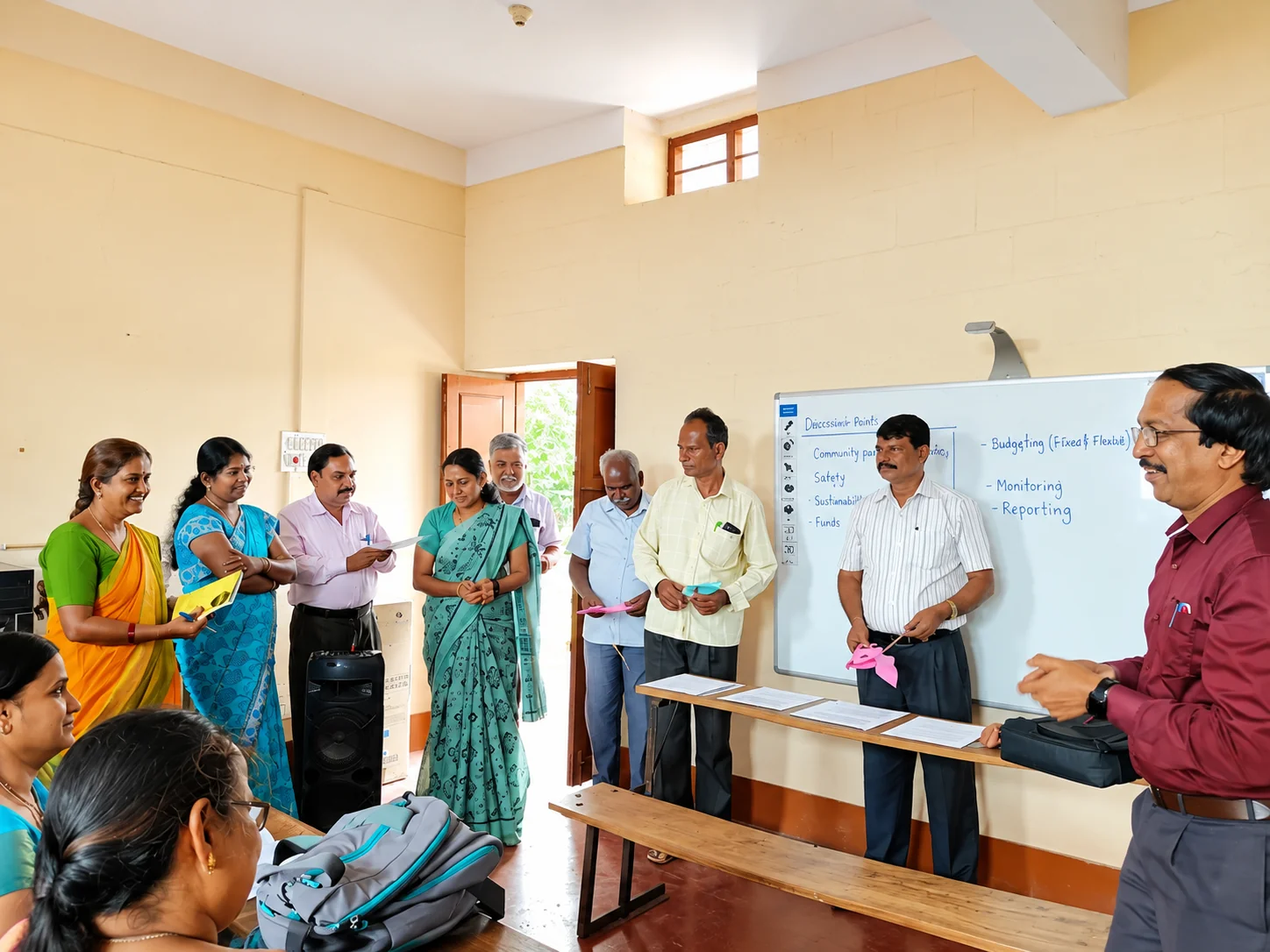
An English-rich classroom starts with the teacher
Students learn a language only when immersed in it — yet teachers in rural government schools rarely get opportunities for spoken practice themselves.
E-Sambhashane bridges this gap by training teachers on speaking competence in classrooms. The program provides a comfortable, low-stress, and non-judgmental learning space that helps teachers overcome fear and hesitation to teach in English in their classrooms.
Teachers who can speak English supporting others to gradually acquire the skill in a fun and engaging weekly learning sessions.
A focus on conversation, not grammar
Every design decision prioritises spoken confidence over rote grammar, building teachers' comfort before layering on vocabulary, sentence structuring and independence.
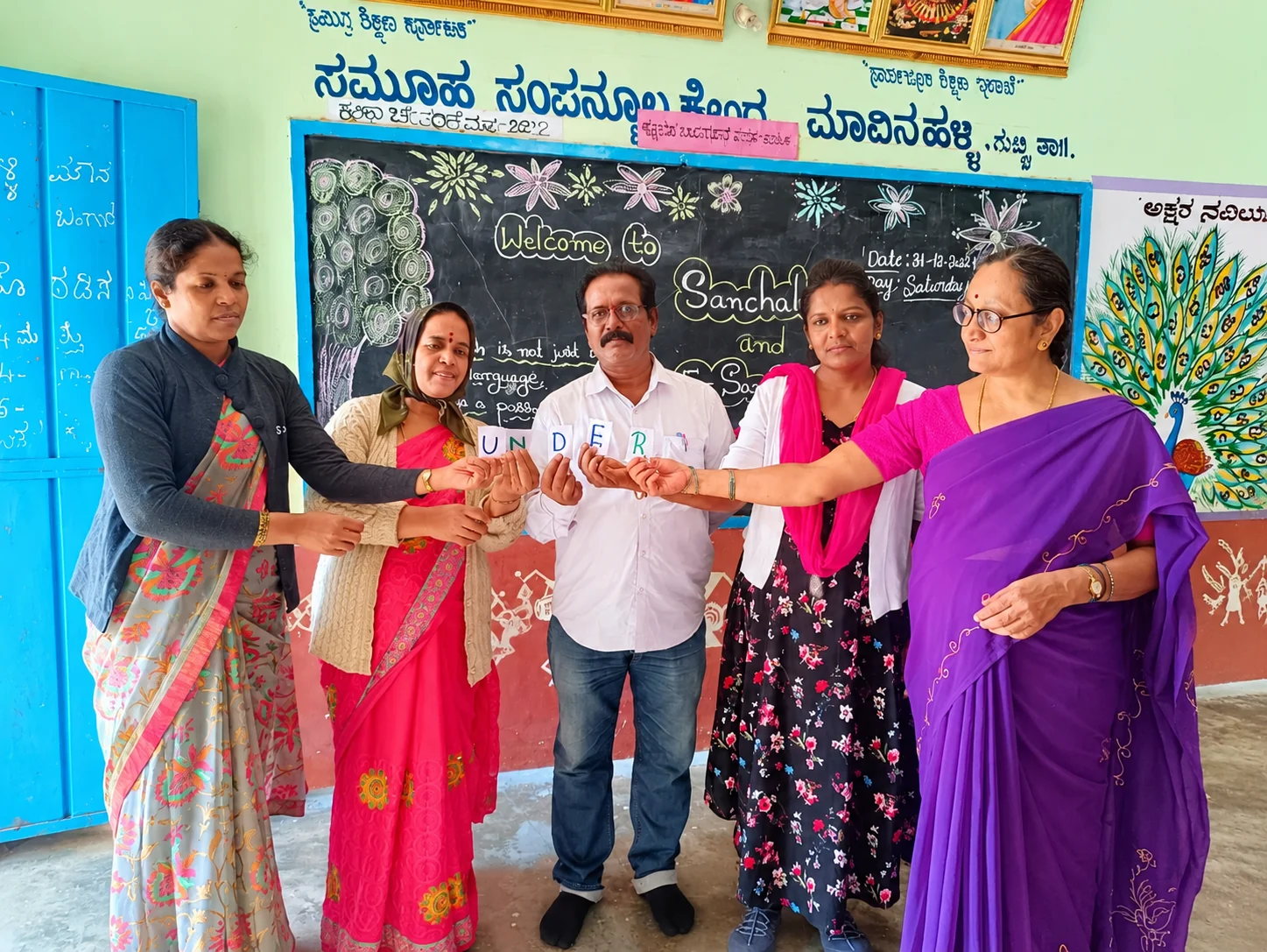
Gradual mastery
Language is built through small, incremental steps and repeated practice over time.
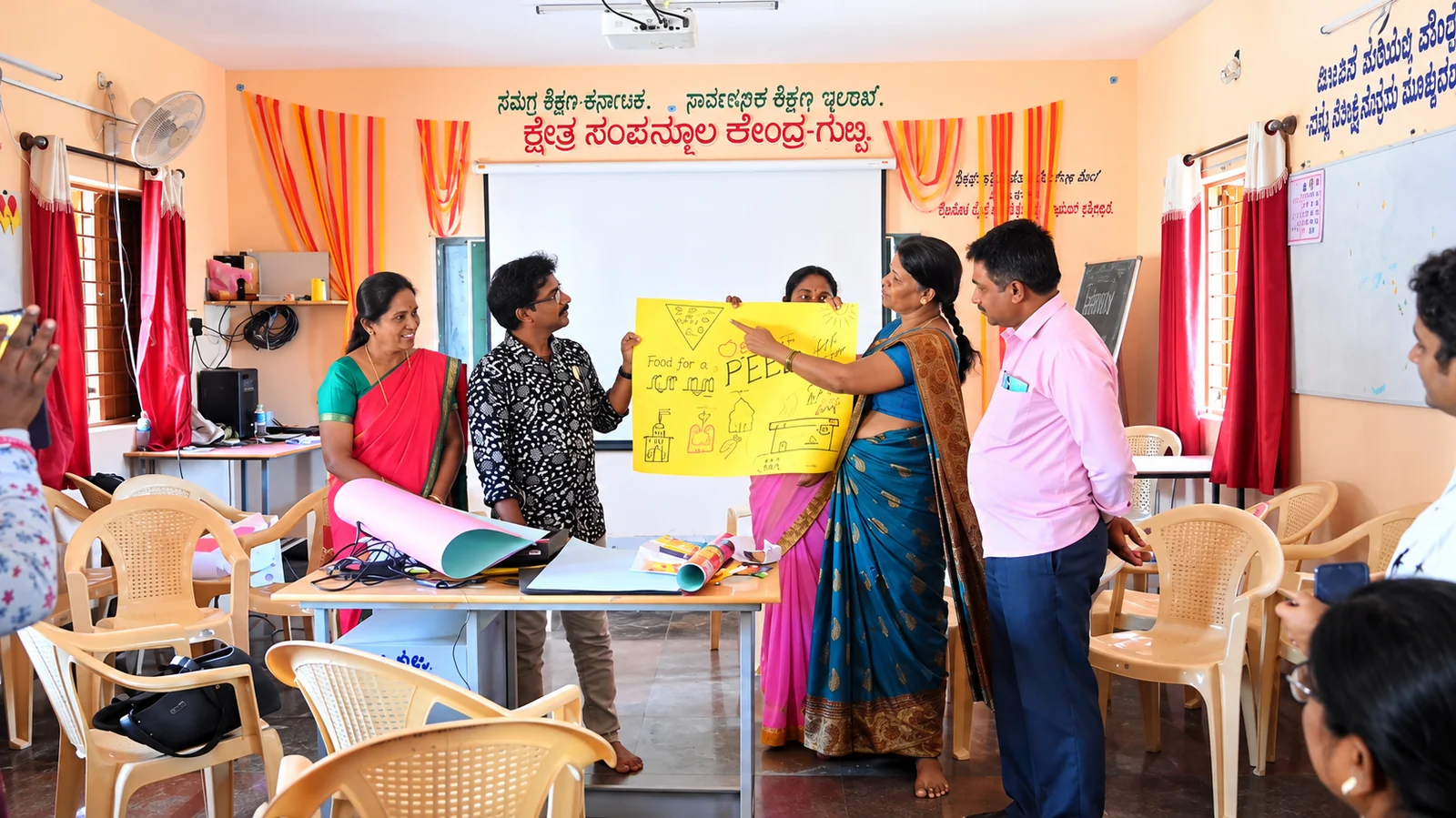
Contextual learning
We prioritise producing real sentences over memorising rules, tied to daily school life.
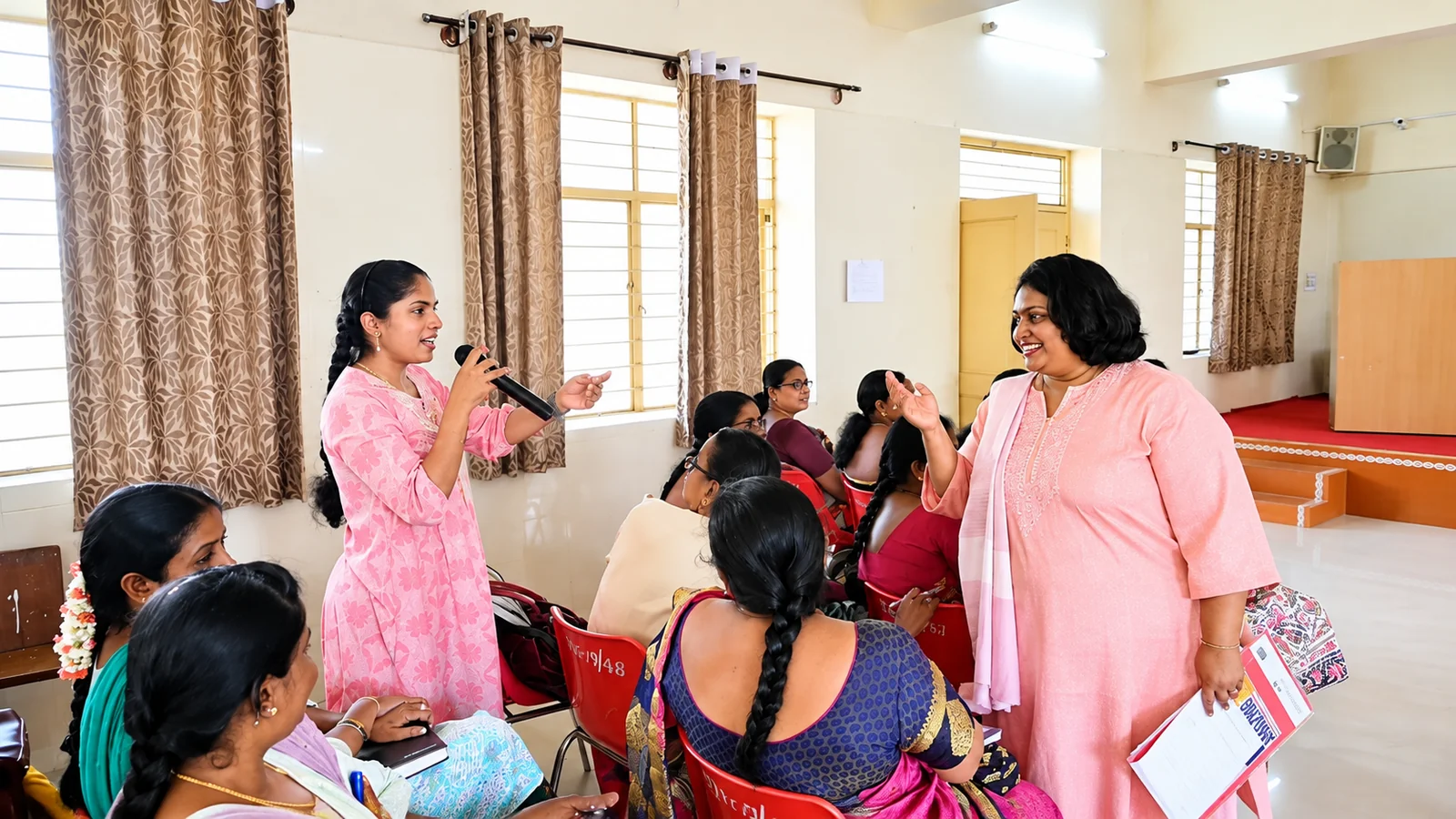
Fun & non-judgemental space to speak
A low-stress, non-judgmental space helps teachers overcome the fear of making mistakes.
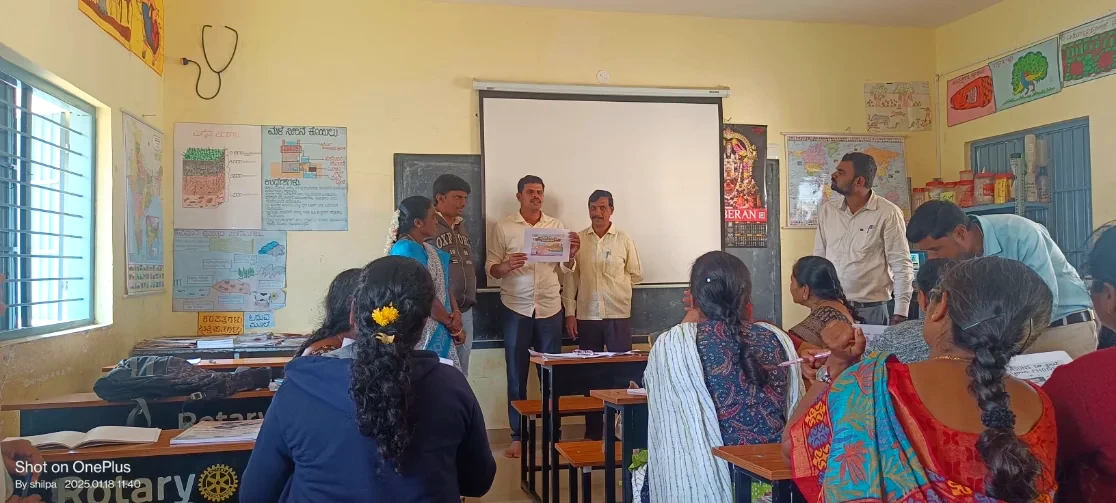
Mother tongue as scaffolding
We use the teacher’s native Kannada as a bridge, allowing a gradual, confident transition to English.
5 metrics for measuring improvement
The program utilizes a holistic language speaking competency measurement framework that spans 5 distinct domains of functional speaking ability.
Governance. DIETs along with block and cluster level officers monitor weekly sessions for their efficacy and participation rates to ensure consistent quality at scale.
Partners for impact
A coordinated ecosystem aligns state policy, academic rigour, district delivery, and program management around a single goal.
DSERT
State-level coordination and policy alignment.
RIESI
The academic anchor for module development and quality assurance.
DIETs
The primary implementation units at the district level.
Caring with Colour
Program management, technology support, and the M&E framework.
Impact of our Spoken English Program
CWC runs the program directly with DIETs and, in some districts, through well trained and passionate volunteers specially recruited from the various corporates, universities and other academic institutions.
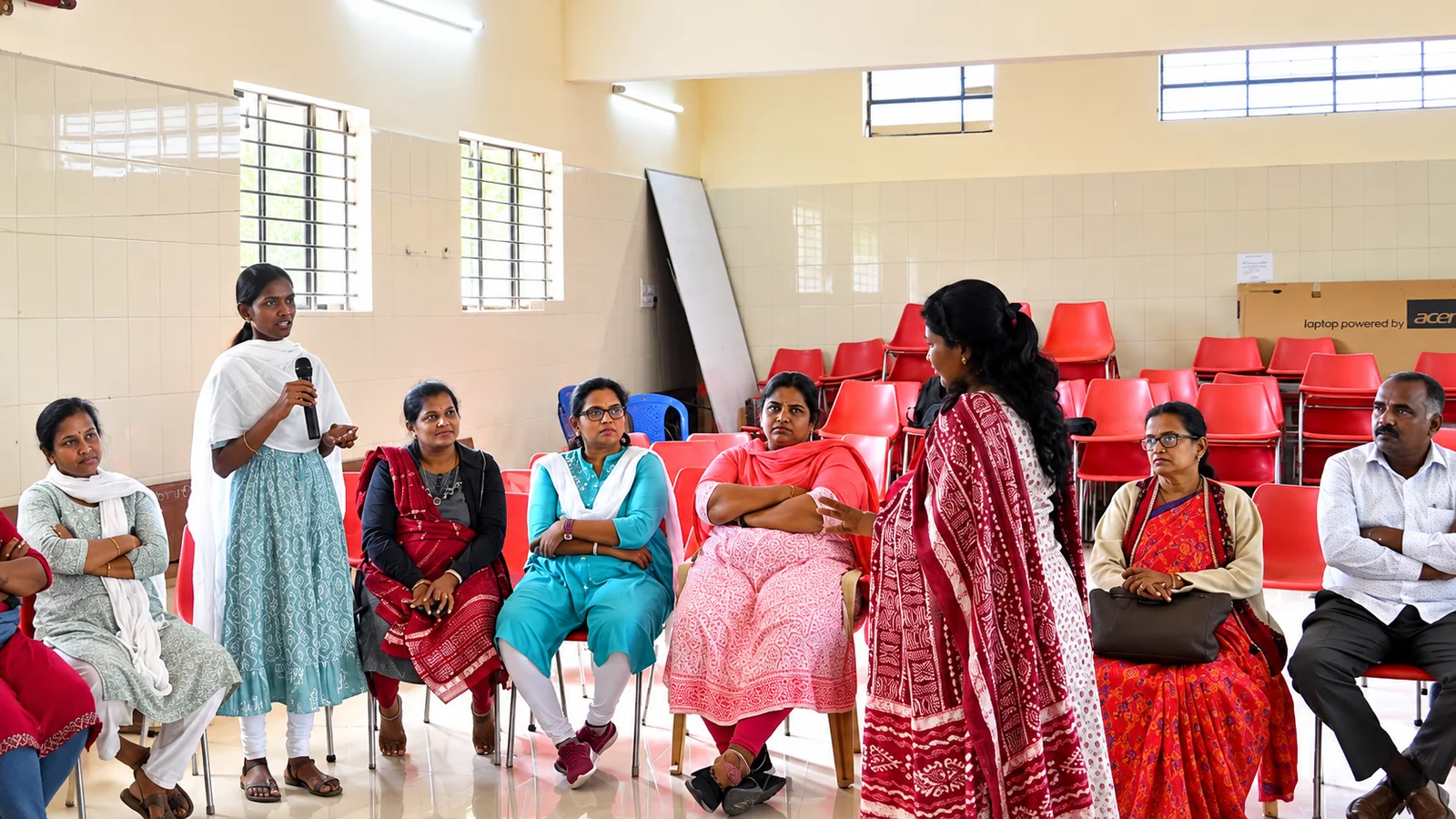
Measured through pre- and post-training assessments tracking spoken confidence, vocabulary and contextual grammar.
Source: CWC Program Impact Assessment, 2024–25
Support our mission to empower rural educators
Partner with us to bring conversation-first English learning to every rural government school.